

Every brand looks incredible in the launch deck. The logo lands, the colours sing, the founder gets a little emotional, everyone claps. Then three months pass. The templates have been stretched, the fonts quietly swapped for whatever was already on the intern’s laptop, the logo squashed to fit a space it was never meant to fit, and the brand that looked so sharp in the boardroom now looks like six different companies wearing the same name badge.
Here is the uncomfortable truth. If your brand only holds together when a specific person is in the room, you do not have a brand. You have a bottleneck with good taste.
It is the most common failure we see, and it is almost never a failure of design. The identity is usually fine. The problem is that the identity lives in one designer’s head, or in a beautiful sixty-page PDF nobody has opened since the day it was emailed. Guidelines are not a system. They are a hopeful document. And hope is not a great way to run a brand across twelve salespeople, four regions, three languages and a marketing intern who started on Monday.
Consistency is engineered, not policed
The instinct, when a brand starts drifting, is to police it. Someone becomes the brand police. They spend their days catching bad slides, resizing logos, forwarding the guidelines again, sighing. It feels like control. It is actually just a very tired person losing a slow war against everyone else’s deadlines.
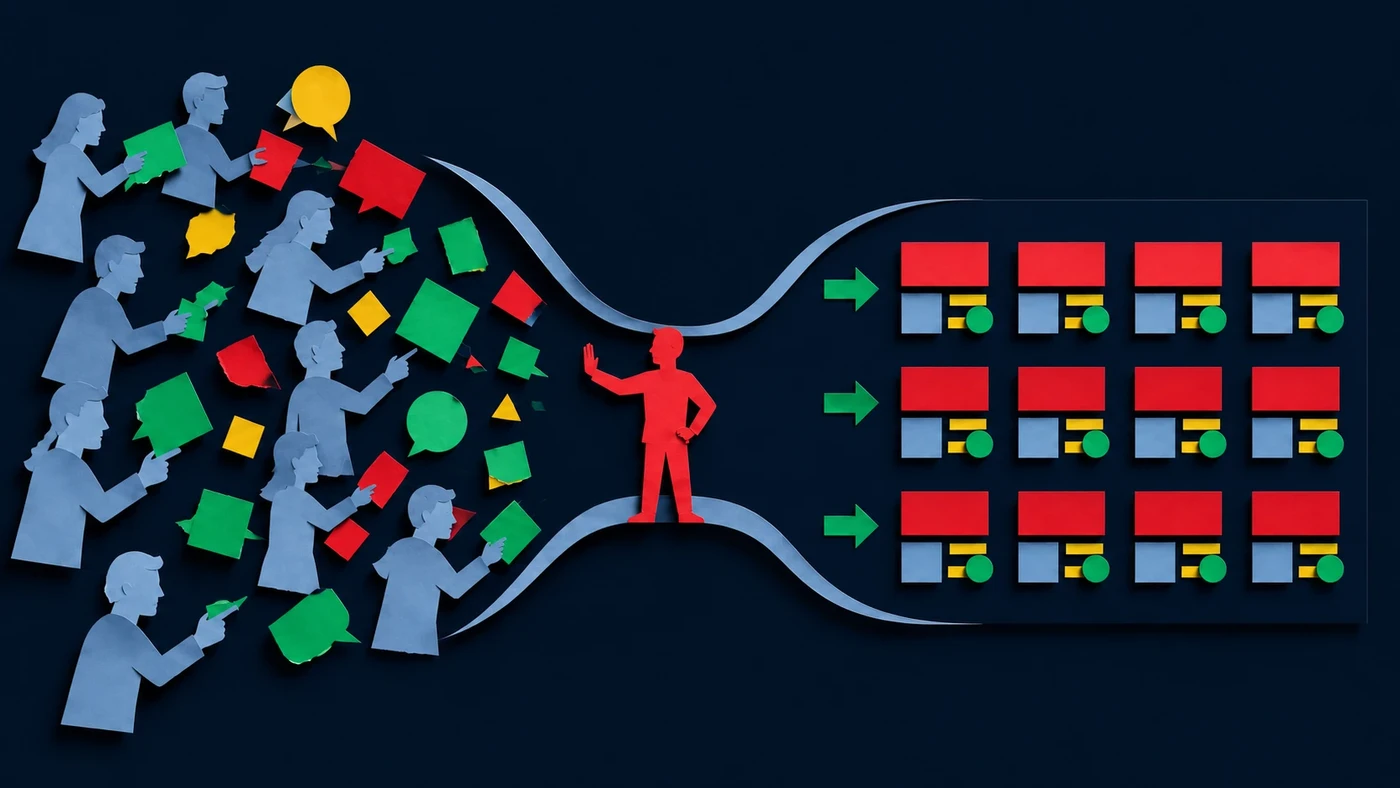
The brands that stay consistent at scale do not rely on willpower or vigilance. They rely on a system. There is a single source of truth, so nobody is working off the old logo they found in an email from 2022. The templates are locked where they should be locked and open only where it is safe to be open, so a regional manager can add their details without accidentally redesigning the whole thing. The assets are in one place, named properly, so people use the right ones because the right ones are the easy ones.
And where the work is repetitive, high-volume or data-driven, it is automated. If you are producing a thousand personalised certificates, a monthly report with the same structure and different numbers, price lists, business cards for a growing team, or product sheets that update every quarter, a human should not be rebuilding those by hand. That is exactly where things break, and exactly where a system earns its keep. You set it up once, and on-brand becomes the default output rather than the lucky one.
This is the quiet, unglamorous part of branding that nobody puts on their showreel, and it is the part that decides whether the brand survives contact with a real organisation. A logo is a promise. A system is how you keep it, at nine in the morning, in a rush, by someone who has never met the designer.
It is also, bluntly, where a lot of the value lives. The design work we do at Sorted increasingly sits inside intelligent templates, automated document production and data-driven systems, precisely because a gorgeous identity that falls apart in month two was never really finished. Making a brand look good once is design. Making it look good every single time, without you, is engineering.
So the test is simple. Take yourself out of the room. Take out your best designer, your most obsessive founder, the one person who quietly fixes everything. If the brand still looks like itself next week, you have built something real. If it starts to wobble the moment you look away, you do not have a brand problem. You have a systems gap, and it is very fixable.
A brand should not need you in the room. It should run without you, hold its shape under pressure, and still look unmistakably like itself when you are on leave. Anything less is just good taste held together by a person, and people, unlike systems, get tired, get busy, and eventually leave.
If your brand only behaves when you are watching it, talk to us. We build the systems that make consistency the default, so you can stop being the brand police and get back to running the business.